Unlock the true power of data with this hands-on, live cohort designed to take you from SQL fundamentals to advanced programming mastery. Whether you're an aspiring data analyst, business intelligence professional, or developer, this program helps you think in SQL—not just write queries.
Through live interactive sessions, real-world case studies, and guided projects, you’ll learn how to extract, transform, and analyze data efficiently across different databases like SQL Server.
What You’ll Learn
- SQL Foundations: Joins, subqueries, aggregations, and filtering for real business use cases.
- Advanced SQL Programming: Window functions, CTEs, stored procedures, triggers, and performance optimization.
- Data Analytics with SQL: Turning queries into insights using real datasets.
- Query Optimization: Write efficient and scalable queries used in enterprise systems.
- Interview & Project Readiness: Solve analytics challenges and SQL interview questions confidently.
Why Join This Live Cohort
- Learn live with an instructor, not from pre-recorded videos.
- Get hands-on practice with assignments and mini-projects.
- Access personal mentorship and query reviews.
- Become industry-ready for data roles (Analyst, Engineer, Scientist).
Section: Introduction to Databases and SQL Server
Following topics will be covered in this module.
Topics:
- What is a Database?
- Types of Databases (Relational vs NoSQL)
- Introduction to SQL Server & SQL Server Management Studio (SSMS)
- Installing SQL Server and SSMS
- SQL Server Architecture Overview (Instance, Database, Schema, Table)
- Database Components (Tables, Views, Stored Procedures, etc.)

Labs Not Created
No lab exercises have been created for this module yet.
Section: Basics of SQL
Following topics will be covered in this module.
Topics:
- Data Types in SQL Server
- Creating Tables (CREATE TABLE)
- Inserting Data (INSERT INTO)
- Reading Data (SELECT)
- Filtering Data (WHERE, AND, OR, IN, BETWEEN, LIKE)
- Sorting and Limiting Results (ORDER BY, TOP)
Labs Not Created
No lab exercises have been created for this module yet.
Section: Working with Multiple Tables
Following topics will be covered in this module.
Topics:
- Understanding Primary Keys and Foreign Keys
- Joins: INNER JOIN, LEFT JOIN, RIGHT JOIN, FULL JOIN
- UNION and UNION ALL
- Subqueries (Simple & Correlated)
Download & Load the Dataset:
Import the provided PostgreSQL tables into your local database environment.
Understand the Business Problem:
Read the lab description carefully to understand the business objective you are solving with SQL.
Write SQL Queries:
Use appropriate SQL concepts such as joins, aggregations, window functions, CTEs, and subqueries to analyze the data and generate insights.
Validate Results:
Ensure your query results are accurate, formatted clearly, and aligned with the business questions.
In this lab you will step into the shoes of a data analyst at a music streaming service. You’ll be given a relational PostgreSQL dataset with tables for songs, albums, artists, genres and user listening history. Your job is to write SQL queries to answer business-driven questions such as: Which songs and genres are getting the most plays? Which albums or artists have the highest user engagement? Which content is under-performing (low plays or likes)? Using those insights, you’ll propose recommendations for content strategy, playlist design and promotion.
Key deliverables:
- Write SQL queries to rank songs by plays / likes / skip rates.
- Analyze engagement by genre and by album.
- Identify songs or artists with low engagement and drill into why.
- Present your findings (via SQL output, summary tables) along with suggestions for how the streaming service should promote or retire certain content.
This lab builds your confidence in using SQL for content catalogue analytics, and gives you a portfolio piece of analyzing real-world styled data in a media/entertainment domain.
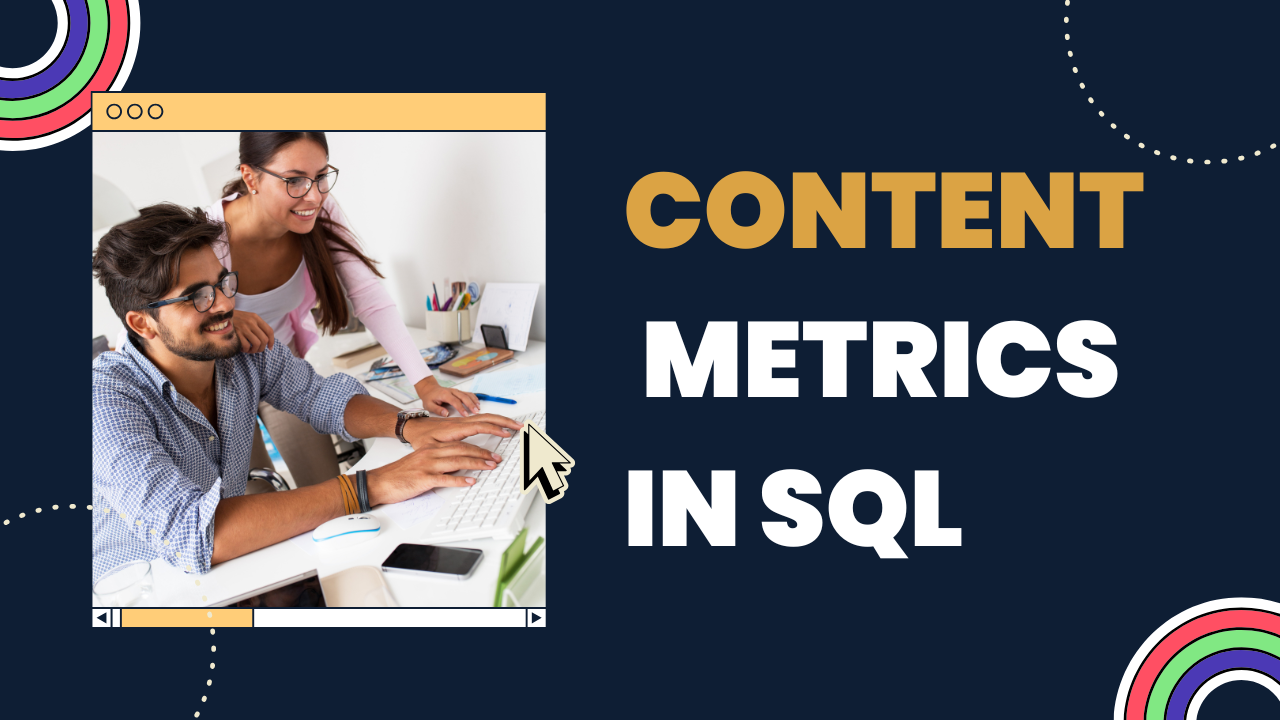
Analyzing Content Performance Using SQL
Group: Use Case
Category: Database Design & Development
Subcategory: PostgreSQL
Price: $1.49 $1.00 32% OFF
Section: Data Aggregation and Grouping
Following topics will be covered in this module.
Topics:
- Aggregate Functions (COUNT, SUM, AVG, MIN, MAX)
- GROUP BY and HAVING Clauses
- Working with Null Values
- Case Expressions (CASE WHEN THEN)
- Download & Load the Dataset:
Import the provided PostgreSQL tables into your local database environment. - Understand the Business Problem:
Read the lab description carefully to understand the business objective you are solving with SQL. - Write SQL Queries:
Use appropriate SQL concepts such as joins, aggregations, window functions, CTEs, and subqueries to analyze the data and generate insights. - Validate Results:
Ensure your query results are accurate, formatted clearly, and aligned with the business questions.
In this lab, you assume the role of a growth or marketing-analytics analyst within a platform (for example a food-delivery or app service) and use SQL to understand how customers join, engage and either stay active or churn. Working with a PostgreSQL dataset, you’ll ask and answer questions such as: When do new users sign up (seasonality, campaigns)? How many become active? Which users show early signs of churn? What behaviours distinguish loyal vs inactive users? You’ll use SQL to segment customers, track time-based cohorts, and identify actionable insights for lowering customer acquisition cost (CAC) and boosting retention.
Key deliverables:
- Use SQL to measure new customer registrations over time (30, 60, 90 days) and relate to activity/engagement.
- Segment customers by status (new, active, dormant, churned) and profile their behaviour (e.g., first purchase time, frequency).
- Detect patterns: e.g., users who signed up during a campaign vs organic, high-value vs low-value customers.
- Recommend strategies: e.g., targeted re-engagement for at-risk customers, improvements to onboarding or activation.
This lab enhances your SQL competence in customer lifecycle analytics, behaviour profiling and data-driven acquisition/retention strategies.
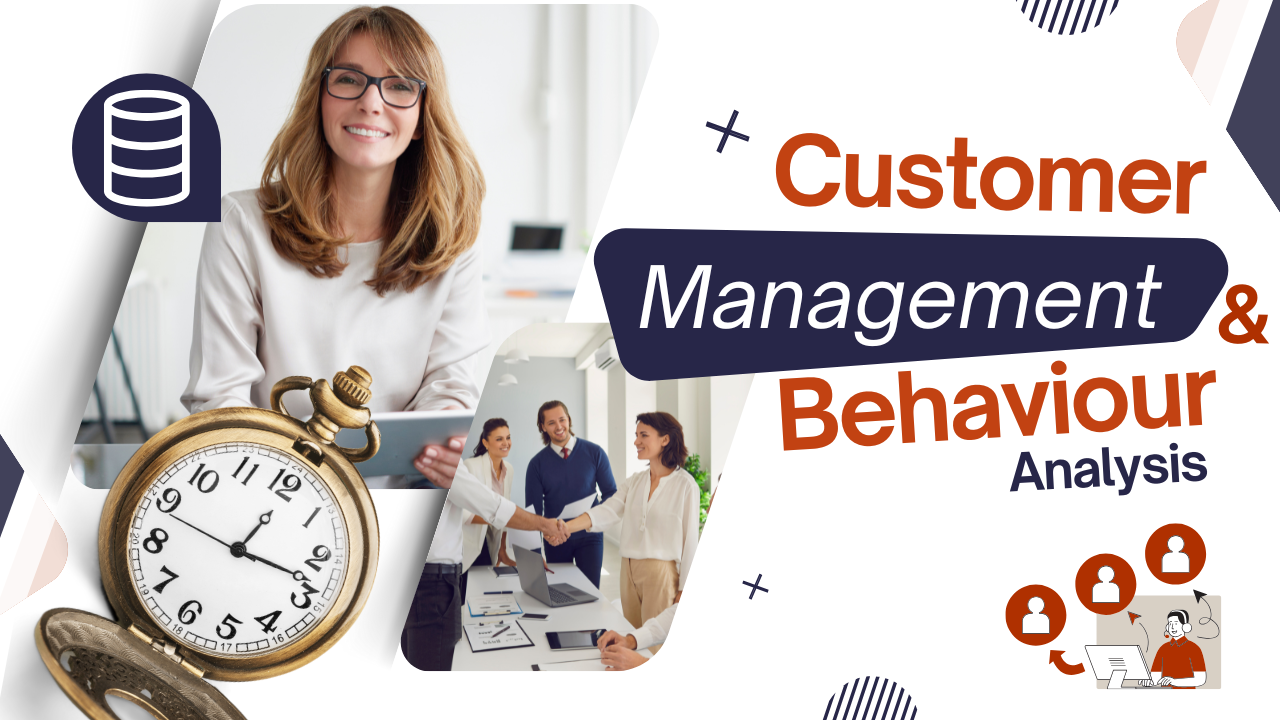
Customer Acquisition and Behaviour Analysis
Group: Use Case
Category: Database Design & Development
Subcategory: PostgreSQL
Price: $2.00 $1.50 25% OFF

Section: Modifying and Managing Data
Following topics will be covered in this module.
Topics:
- UPDATE and DELETE Statements
- Transactions (BEGIN TRANSACTION, COMMIT, ROLLBACK)
- Constraints (PRIMARY KEY, FOREIGN KEY, CHECK, UNIQUE, DEFAULT)
- Identity Columns and Sequences
Labs Not Created
No lab exercises have been created for this module yet.
Section: Database Design and Normalization
Following topics will be covered in this module.
Topics:
- Database Design Process
- Normalization (1NF, 2NF, 3NF, BCNF)
- Denormalization Concepts
- Schema Design in SQL Server
Labs Not Created
No lab exercises have been created for this module yet.
Section: Advanced SQL Concepts
Following topics will be covered in this module.
Topics:
- Common Table Expressions (CTEs)
- Window Functions (ROW_NUMBER, RANK, OVER)
- Temporary Tables and Table Variables
- Views (Creating and Managing)
- Stored Procedures and Parameters
- User Defined Functions (Scalar and Table-Valued)
Labs Not Created
No lab exercises have been created for this module yet.
Section: Performance Optimization
Following topics will be covered in this module.
Topics:
- Indexes (Clustered & Non-Clustered)
- Query Execution Plans
- Statistics and Query Optimisation Techniques
- Avoiding Common Performance Pitfalls
Labs Not Created
No lab exercises have been created for this module yet.
Section: Security and User Management
Following topics will be covered in this module.
Topics:
- Authentication Modes (Windows & SQL Server)
- Creating Logins and Users
- Granting and Revoking Permissions (GRANT, REVOKE, DENY)
- Roles and Security Best Practices
- Data Encryption Basics
Labs Not Created
No lab exercises have been created for this module yet.
Section: T-SQL Programming
Following topics will be covered in this module.
Topics:
- Variables and Control Flow (IF, WHILE)
- Dynamic SQL
- Error Handling (TRY...CATCH)
- Triggers (AFTER, INSTEAD OF)
- Download & Load the Dataset:
Import the provided PostgreSQL tables into your local database environment. - Understand the Business Problem:
Read the lab description carefully to understand the business objective you are solving with SQL. - Write SQL Queries:
Use appropriate SQL concepts such as joins, aggregations, window functions, CTEs, and subqueries to analyze the data and generate insights. - Validate Results:
Ensure your query results are accurate, formatted clearly, and aligned with the business questions.
In this lab, you take on the role of an analytics specialist responsible for monitoring and improving user engagement on a digital platform. Using a PostgreSQL-based dataset that captures user sessions, clicks, watch time, interactions, and feature usage, you will build SQL-driven engagement dashboards that reveal how users interact with the platform. You will apply advanced SQL techniques to calculate engagement metrics, segment users based on activity, identify drop-off patterns, and surface actionable insights for product and marketing teams to drive higher retention and session time.
Key Deliverables:
- Write SQL queries to track user engagement metrics such as daily active users (DAU), session frequency, average watch time, and feature adoption.
- Build engagement cohorts to compare new vs returning users over time.
- Identify user drop-off points, inactivity segments, and underused platform features.
- Provide recommendations to improve user retention, session depth, and overall engagement.
This lab helps you master SQL for behavioral analytics, product intelligence, and real-time decision-making based on user interaction data.
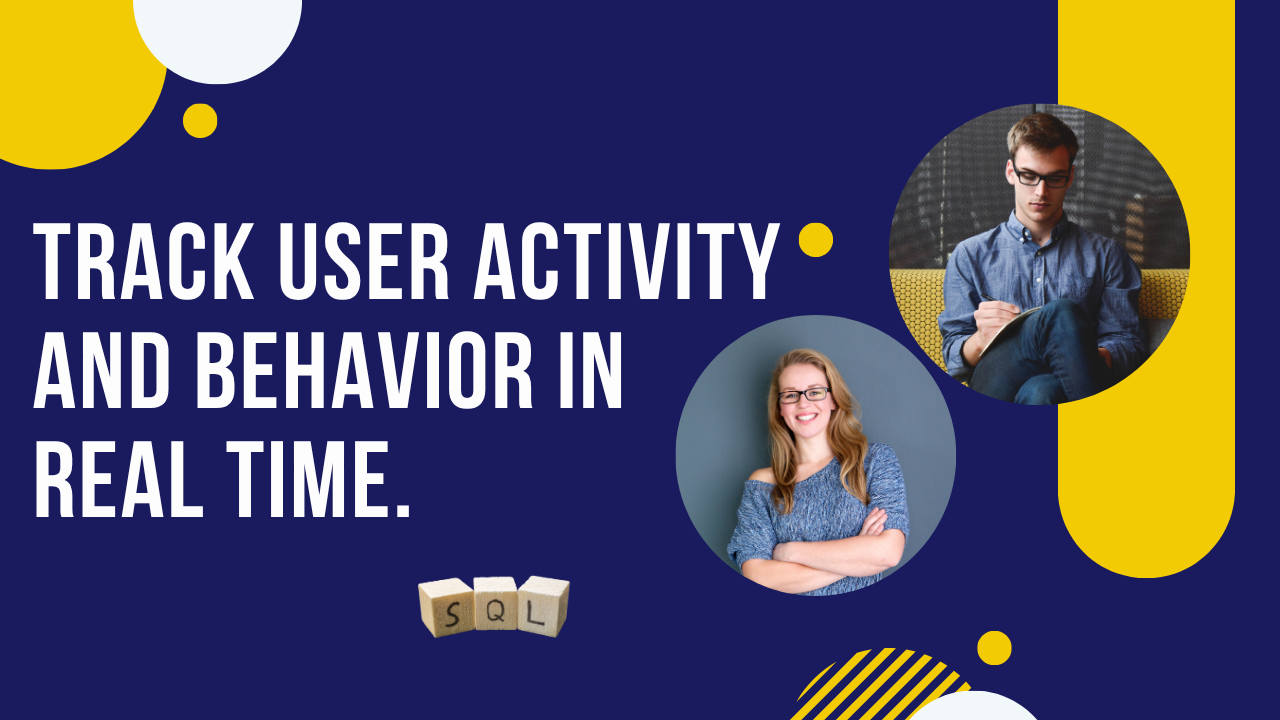
User Engagement Analytics Dashboard Using SQL
Group: Use Case
Category: Database Design & Development
Subcategory: PostgreSQL
Price: $1.80 $1.40 22% OFF

Section: Live Capstone Project
E-commerce Order Database — Track customers, orders, payments, and inventory.
- Download & Load the Dataset:
Import the provided PostgreSQL tables into your local database environment. - Understand the Business Problem:
Read the lab description carefully to understand the business objective you are solving with SQL. - Write SQL Queries:
Use appropriate SQL concepts such as joins, aggregations, window functions, CTEs, and subqueries to analyze the data and generate insights. - Validate Results:
Ensure your query results are accurate, formatted clearly, and aligned with the business questions.
This capstone lab places you in a more senior role: you’re responsible for the end-to-end analytics & operations stack for a fictitious enterprise (modeled on the classic AdventureWorks corporate database scenario). Using a PostgreSQL schema you will combine data modelling, query engineering, performance tuning and analysis across departments (sales, manufacturing, supply chain, customer service). You’ll produce complex SQL solutions (e.g., CTEs, window functions, partitioning), build dashboards or aggregated tables for operations and business intelligence, and deliver recommendations to leadership on operational efficiency, revenue growth or cost reduction.
Key deliverables:
- Refine or extend the schema (add indexes, partitions) for performance.
- Write advanced SQL queries that deliver business-operational reports (e.g., order lead time, production backlog, inventory turnover, customer returns).
- Join data across domains (sales, supply chain, service) to uncover cross-functional insights.
- Summarize your findings and propose improvement actions for the business (e.g., reduce order fulfilment time, improve customer satisfaction, streamline manufacturing).
This lab deepens your SQL engineering expertise: not just querying but structuring, optimizing and producing analytics outputs for real-world enterprise operations.
Advanced SQL Engineering with Adventure Works: End to End Analytics & Operations
Group: Capstone Project
Category: Database Design & Development
Subcategory: PostgreSQL
Price: $15.99 FREE
Section: Job Interview Preparation and Q&A
Following topics will be covered in this module.
- Know your Resume
- Company & Role Research
- Technical & Aptitude Prep
- Soft Skills & Body Language
- Common Questions & How to Answer
- Mock Interview Demo & Roleplay
Labs Not Created
No lab exercises have been created for this module yet.
$44.74 $239.27 81% OFF
$29.00 $199.00 85% OFF
$40.27 $15.74 60% OFF
-
 Expert instructor support
-
 Hands-on practical training
-
 Certificates & Recognition